Nine players take the field on defence. Where they stand is not random: each position covers a piece of open space, shortens the throw and helps get outs faster. Once you know who's responsible for what, the game stops being “a ball flying around the field” and becomes shared work.
This is the third part of the series. We wrote about the duel between pitcher and batter in the part on batting.
The battery: pitcher and catcher
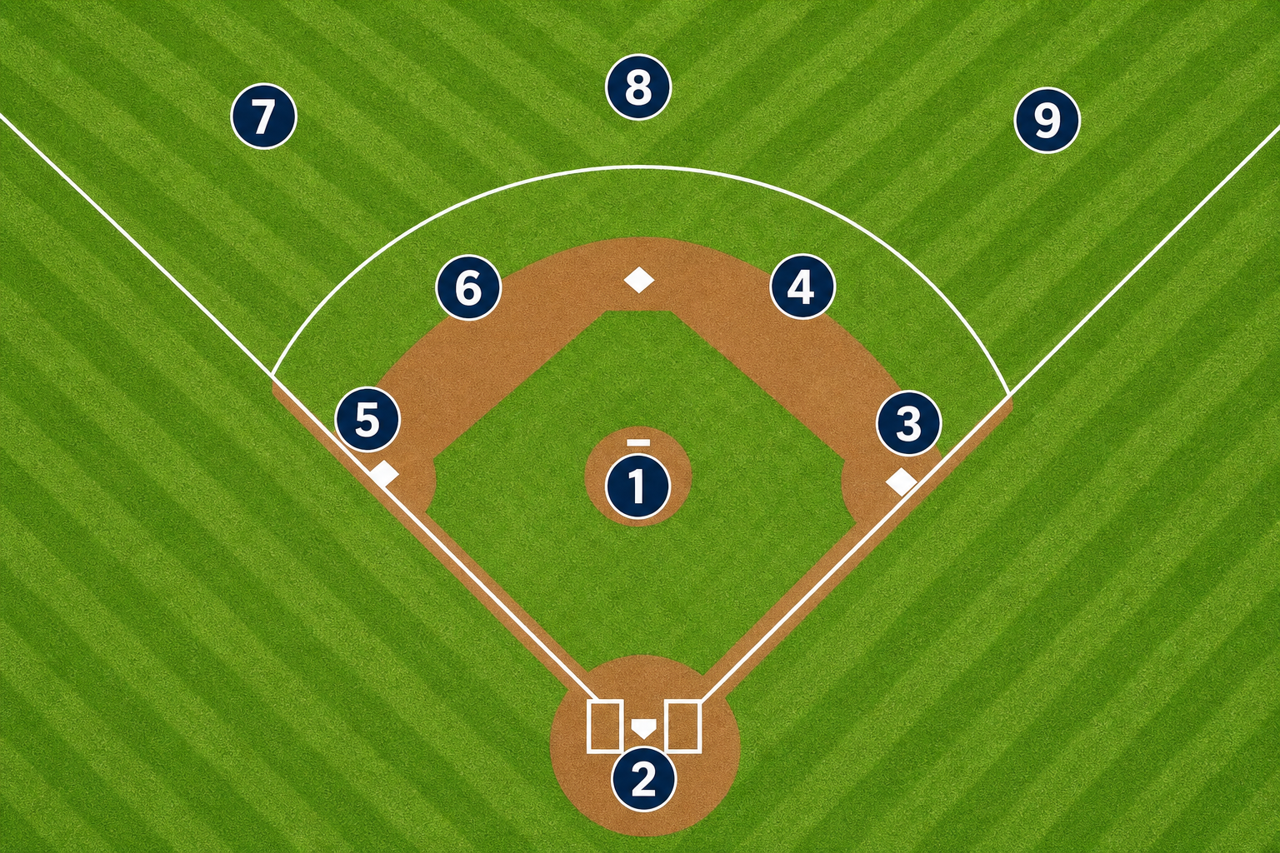
The pitcher (1) starts the play with a throw from the mound. They set the tempo, choose the type of pitch, and after the ball is hit they have to be ready to defend their own area. The catcher (2) catches behind home plate, watches the runners and helps set up the defence. It's teamwork, not a one-on-one duel, especially when someone's on base.
When we coach children, not everyone goes straight onto the mound, because throwing at full intensity takes technique and careful control of the workload. Catcher is also a specialist position: helmet, protective gear, working in a squat. At the start we teach basic habits, not league roles.
The infield
- First baseman (3) finishes many plays at first base. They take throws from teammates and have to be reliable at catching the ball.
- Second baseman (4) and shortstop (6) work between the bases and often start a double play. They need quick feet and a clean throw.
- Third baseman (5) fields hard-hit balls near third base, sometimes called the “hot corner”.
The outfield
- Left fielder (7): left field.
- Centre fielder (8): centre field, usually with the most ground to cover.
- Right fielder (9): right field.
Outfielders cover the deep balls and send them back to the infield. A good throw from the outfield doesn't always go straight to the base. Often it goes through a cut-off, so that it doesn't lose accuracy.
Communication
A ball in the air can be within reach of several players. The one who takes it says so out loud, and the others get into position to back up. Once the ball is fielded, relays matter too: placing players so that the throw gets back to the right base without losing time.
In training we practise this slowly first, then in a game. A child who shouts “mine” does more for the team than one who says nothing and runs into a teammate.
What next
Positions make sense once you have a plan for a particular situation. Read about strategy, bunts and stolen bases, and then go back to the whole series, starting with the basics of the field. At Goats training we teach defence from the feet and the voice, not from the number on the shirt.