Every pitch starts with a decision. The pitcher wants to put the ball in the strike zone, and the batter judges whether to swing or let it go. The umpire behind home plate rules on what happened. Once you understand that duel, the rest of the game becomes readable: you know why someone holds back, why someone takes a risk, and where a walk comes from.
This is the second part of the series. If the field and the innings are still unclear, go back to the basics.
Strike, ball and walk
Picture a rectangle above home plate, roughly from the batter's knees to the middle of their torso. A pitch in that zone that the batter doesn't swing at is a strike. Every swing and miss is a strike too. A ball is a pitch outside the zone that the batter doesn't swing at.
- Three strikes is a strikeout: the batter is out.
- Four balls is a walk: the batter goes to first base automatically.
On the scoreboard the state of the duel is written as the count, for example 2–1: two balls, one strike. The more balls there are, the more pressure on the pitcher to throw a strike. The more strikes, the more the batter has to be ready to defend.
Ball in play and foul
After the batter hits it, the ball is fair if it lands in the field of play, or foul if it lands outside the foul lines. A foul adds a strike as long as the batter has fewer than two, but it is never the third strike. Once there are two strikes, further fouls don't end the at-bat: the batter can keep hitting until they put the ball in play or are put out another way. The exception is a failed bunt with two strikes, because then a foul is an out.
A ball caught in the air, including in foul territory, is an out. That's why a fielder chasing a ball by the line is still in the game.
The most common outs
- Strikeout: the batter gets a third strike.
- Fly out: a fielder catches the ball before it touches the ground.
- Force out: the defence gets the ball to a base the runner has to reach.
- Tag out: a fielder touches the runner with the ball while the runner is off the base.
Three outs end the half-inning. You don't need to know every variation to follow a game. It's enough to tell whether the ball was in the air or on the ground, and whether the runner had to leave the base.
How to watch it
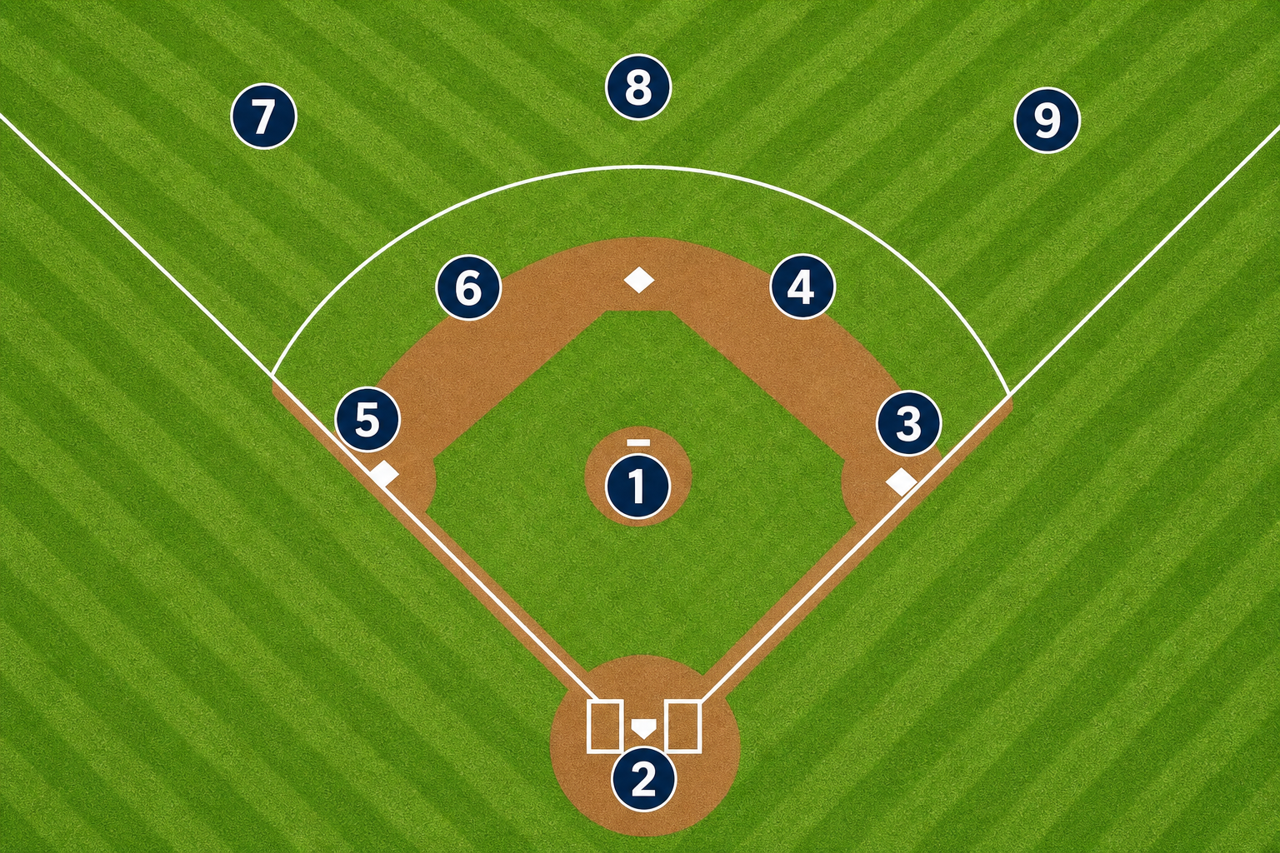
Keep an eye on the count, the number of outs and who's on base. Then it's easy to see why the pitcher risks a pitch in the zone, or why the batter lets one go. Have a look at the fielding positions too, so you know who reacts after the ball is hit.
At Goats training these rules come up in small games, not in a test. A child first feels that after three missed swings they're out, and the names come later.