Baseball gets simpler once you know what it's about. The team batting moves runners around the bases and tries to get them back to home plate. The team in the field tries to get three outs, and then the roles swap. Everything else, meaning strikes, positions and tactics, only makes sense against that background.
We wrote this series for parents, new players and anyone sitting in the stands for the first time. You don't need to know the league exceptions. All you need to know is who is running and why, and when a half-inning ends.
The field and the four bases
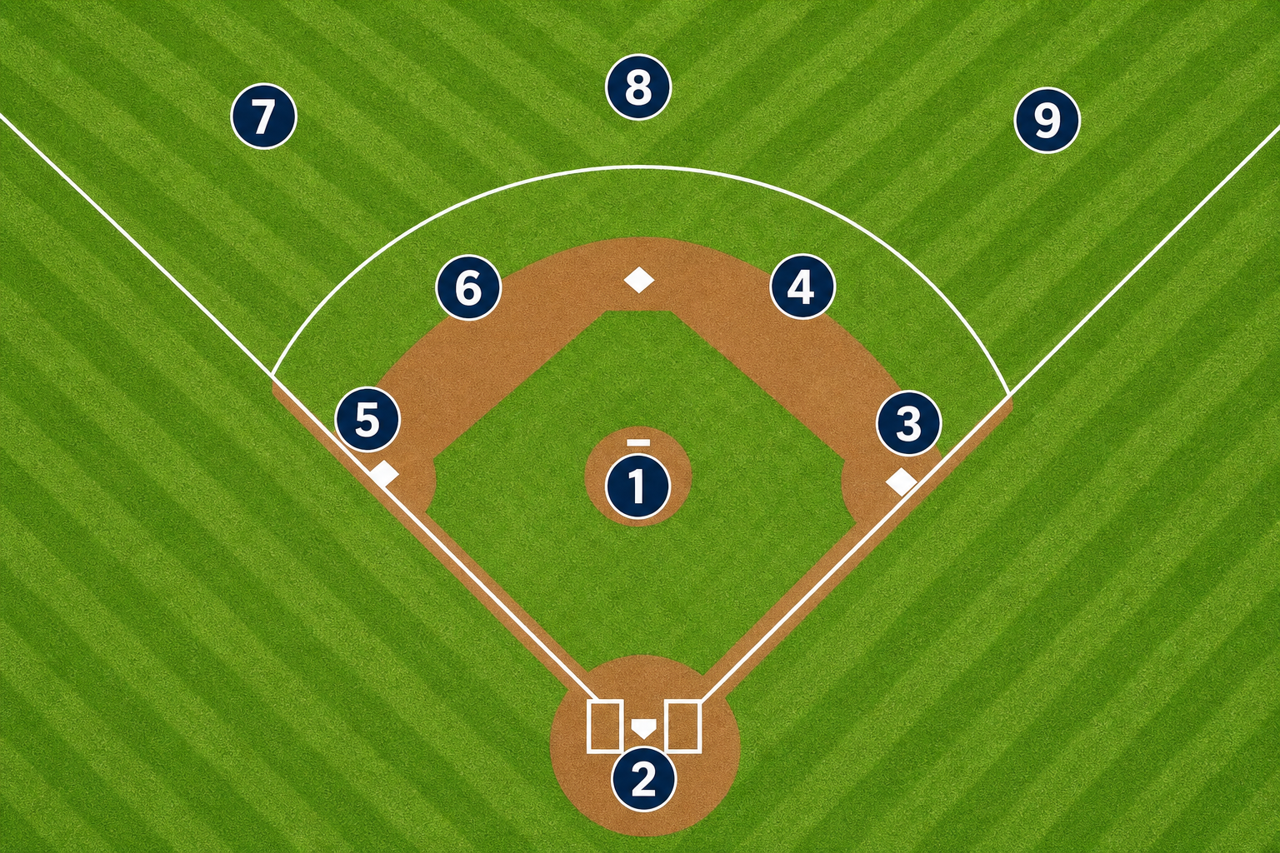
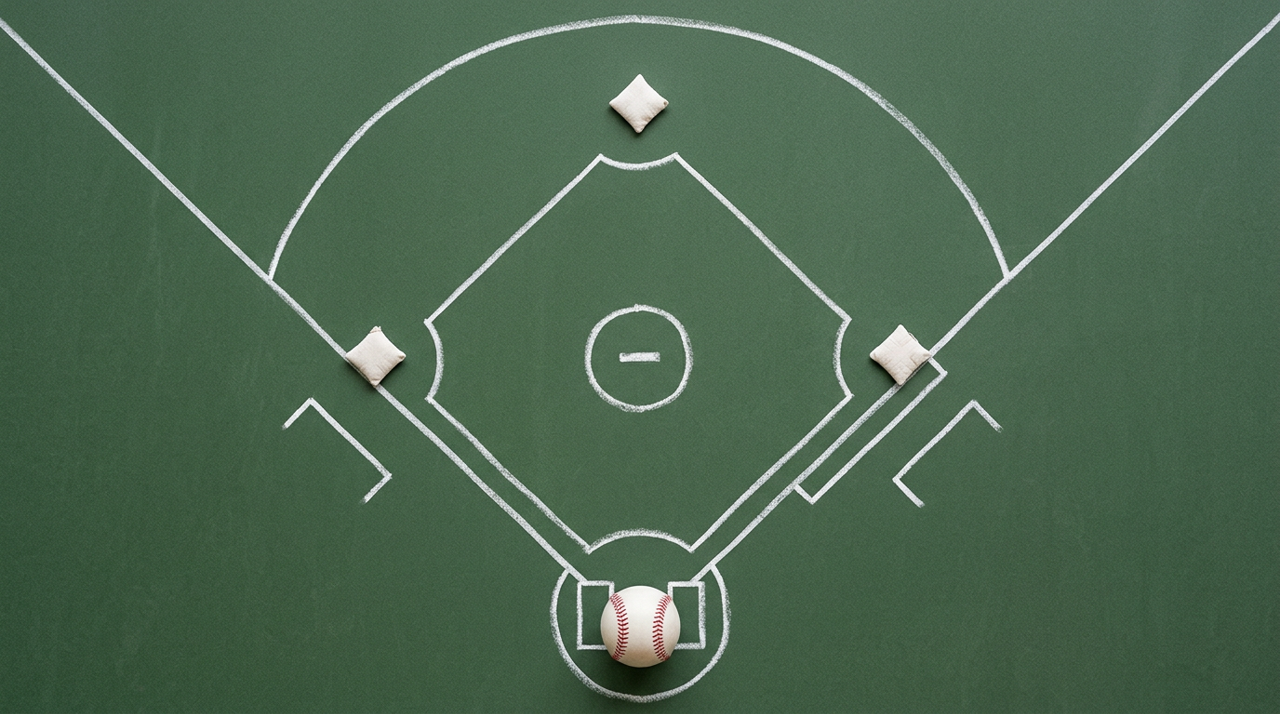
The middle of the field is the diamond: a square standing on one corner. Home plate and first, second and third base sit at its corners. A runner goes round in that order and can't cut the corner. The pitcher's mound is in the infield, and the outfield begins beyond it.
- Home plate is where the batter stands, and the finish line for a run.
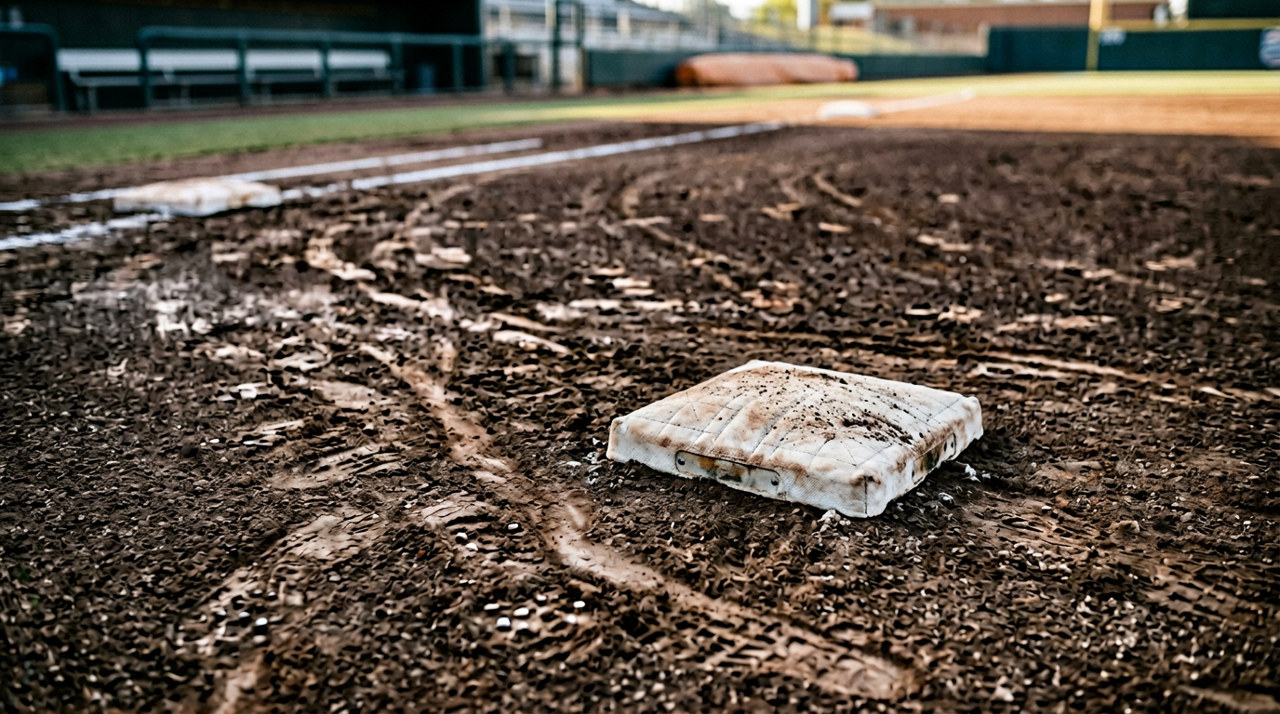
- On a base the runner is safe, unless they have to leave it because another runner is coming up behind them (a force).
- The foul lines mark out the field of play. A ball that lands outside them is a foul, not a fair ball.
In children's training the diamond is often smaller, and the distances grow with the age category. The rule of running the bases is the same.
How an inning works
In classic baseball you play nine innings. Each has two halves: the visitors bat first, then the home team. A half-inning ends after three outs. In children's competitions the number of innings, pitch limits and playing time are sometimes adapted to age, and the rules of the league in question have the last word.
When you're watching a game for the first time, look at the scoreboard: which half, how many outs, who's on base. Those three things make sense of the whole picture.
Where runs come from
Most often the batter hits the ball into the field of play, reaches a base, and the following plays move them further round. A run counts when a runner legally touches home plate. A home run is only one way to get there. Just as often it's a series of simple plays that decides it: a hit, a stolen base, a walk and another advance.
You can win a game without a single home run. That's why we teach children to appreciate a clean, well-thought-out play, not just a ball over the fence.
Batting and fielding swap places
Nine fielders take their positions, and nine batters come up to bat in a set order. After three outs the teams swap roles. This rotation is the heart of the game, and the reason every player has to be able to both throw and stand at the plate.
For your first game
Don't try to follow everything at once. Watch the number of outs, who's standing on the bases, and which team is batting. As a next step, read about strikes, balls and outs, and the duel between pitcher and batter will be much easier to follow. The series is rounded off by the articles on defence and strategy.
Everything “clicks into place” fastest when you see it at a session. Come along to Goats training: the coach explains the game as it happens, not on slides.